Bus 19 is the official public shuttle linking Marrakech-Menara Airport (RAK) to the city centre. It runs roughly every 20 to 30 minutes, costs around 30 MAD one way (a return ticket is about 50 MAD and stays valid for the whole trip), and reaches Jemaa el-Fna in about 20 to 30 minutes. The stop sits just outside the arrivals terminal, you pay the driver in cash (or with a local card on newer buses), and there is room on board for suitcases. If you are travelling light, are not in a hurry, and want to avoid the classic airport-taxi haggling, Bus 19 is the cheapest and most transparent way into town.
This guide explains exactly how the line works in 2026: where it goes, every useful stop, the timetable and frequency, how much a ticket really costs and where to buy one, the luggage situation, and a clear step-by-step method for catching it straight from the arrivals hall. We also compare it honestly against the petit taxi and the private transfer, flag the mistakes travellers make most often, and answer the questions that come up again and again. All prices and times are given as an indication and can change without notice, so treat them as a planning baseline rather than an official timetable.
A quick note on independence: marrakechairport.net is an independent, unofficial visitor guide. We are not affiliated with the airport operator, with ALSA, or with any transport company. We publish what genuinely helps travellers, and we tell you when a detail is approximate.
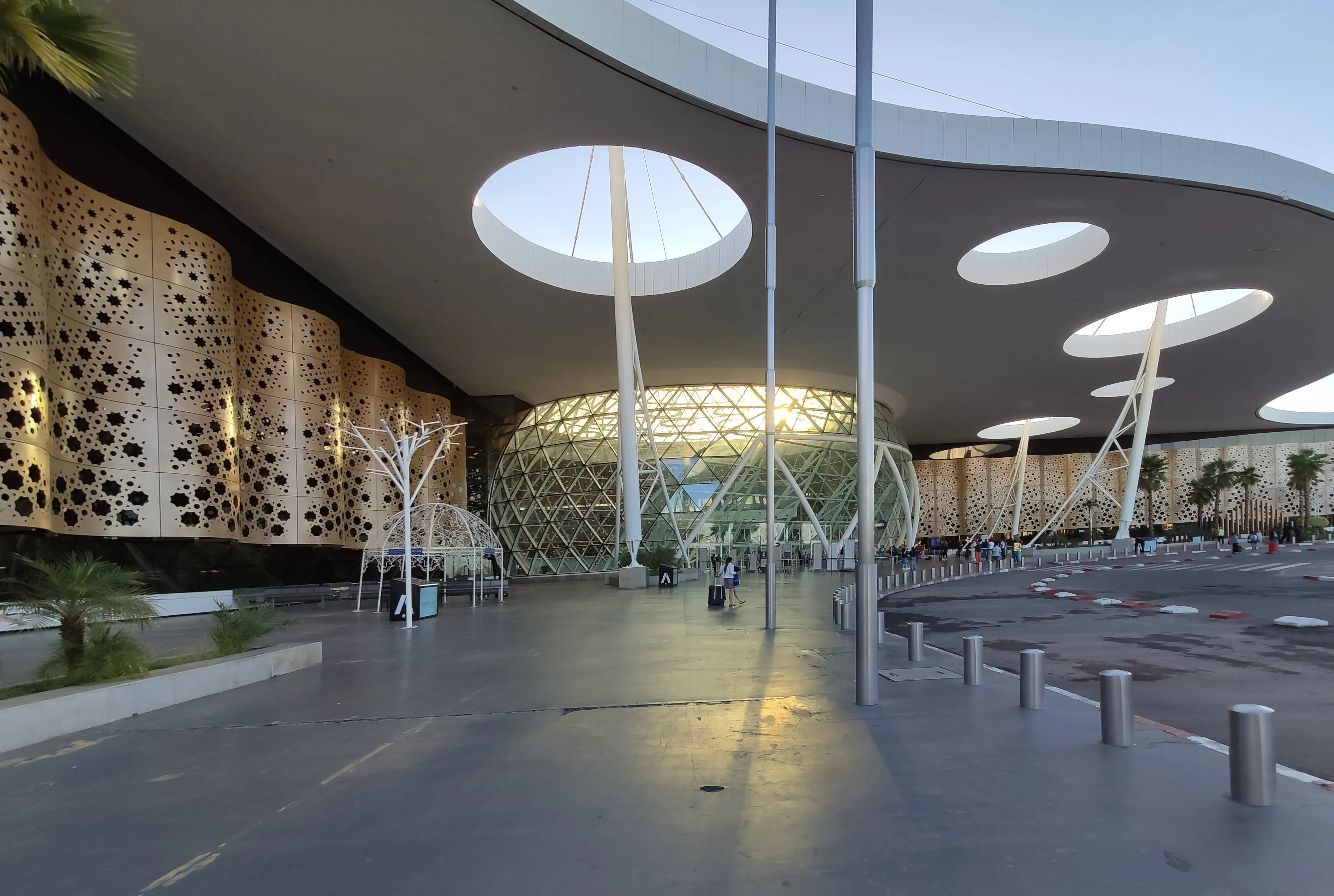
What is Bus 19?
Bus 19 (often written “L19”, “Line 19” or “Bus No. 19”) is the dedicated airport shuttle of Marrakech’s public transport network. The city bus network is operated by ALSA, a company that runs the urban buses across Marrakech under contract with the local authorities. Line 19 is the one specifically designed to connect Marrakech-Menara Airport with the main tourist and transport hubs of the city, which is why you will sometimes see it branded as the “Airport Shuttle” or “Navette Aéroport” on the vehicles themselves.
A few things set Bus 19 apart from the ordinary city lines:
- It is aimed at travellers, not just commuters. The buses used on this route are typically more comfortable coaches with dedicated luggage space, rather than the standard crowded city buses.
- It has a single, simple flat fare. You pay one price regardless of where you get on or off along the line, which removes any guesswork.
- The return ticket is a genuine bargain. Buying a round trip up front is cheaper than two singles, and the return portion stays valid so you can use it on the way back to the airport at the end of your stay.
- It is transparent. The fare is fixed and printed, so there is no negotiation, no meter, and no “night surcharge” surprise of the kind that catches people out with taxis.
In short, Bus 19 is the closest thing Marrakech has to a no-nonsense airport express. It will not drop you at the door of your riad in the medina (no vehicle can, because the old town’s lanes are too narrow), but it gets you within easy walking or short-taxi distance of almost everywhere a visitor wants to be.
Route and stops
Line 19 runs as a loop between the airport and the city centre, taking in the main arteries that matter to visitors. The exact list of stops can be adjusted by the operator, and drivers do not always announce them, so it helps to know the landmarks in advance. Broadly, the route threads from the airport through the modern district of Gueliz, past the Hivernage hotel zone, along the edge of the medina near Bab Doukkala, down to Jemaa el-Fna, and on to the train station (Gare de Marrakech).
Here is a practical overview of the key stops and why each one is useful:
| Stop | Area | Good for | Approx. time from airport |
|---|---|---|---|
| Marrakech-Menara Airport | Airport | Departure / arrival point | 0 min |
| Menara / Avenue Mohammed VI | Between airport and Gueliz | Menara Gardens, nearby hotels | 5-10 min |
| Gueliz (Avenue Mohammed V) | New town | Modern hotels, cafés, shops, restaurants | 10-15 min |
| Hivernage | Hotel district | Big resort hotels, nightlife | 12-18 min |
| Bab Doukkala | Edge of the medina | Northern medina riads, bus station area | 15-22 min |
| Jemaa el-Fna (Koutoubia / Arset El Bilk) | Medina | The famous square, souks, most medina riads | 20-30 min |
| Gare de Marrakech (train station) | Gueliz / station | Onward trains to Casablanca, Rabat, Tangier | 25-35 min |
A few points worth understanding about this table:
- The order depends on direction. On the way into town the bus generally reaches Gueliz and Hivernage before the medina; on the way back to the airport the sequence is reversed. If you are heading to the airport, board in the direction marked for the airport and confirm with the driver.
- “Jemaa el-Fna” means the edge of the square, not the square itself. The shuttle sets down near the Koutoubia mosque and the Arset El Bilk area, a short and easy walk from the square proper. From there you continue on foot into the medina to reach your accommodation.
- The train station stop is genuinely useful if you are combining your Marrakech trip with a train to Casablanca or Tangier, or if your hotel is in Gueliz near the station.
- Bab Doukkala is the handiest stop for riads in the northern half of the medina, and it sits close to the intercity coach terminal, which is convenient if you are connecting to a long-distance bus.
If you are weighing this route against a door-to-door option, our companion article on getting from Marrakech airport to the city centre breaks down every transport mode side by side.
Timetable and frequency
Bus 19 runs every day of the week, including weekends and public holidays, which is one of its real advantages over relying on a specific person or a pre-booked slot. The service operates at a high frequency during the day and thins out in the late evening.
As a planning baseline for 2026:
- First departure from the airport: around 06:00 to 06:30 in the morning.
- Last departure from the airport: commonly cited between 21:00 and 23:30, depending on the season and the source. Evening frequencies are less reliable than daytime ones, so do not count on the very last theoretical bus.
- Frequency: roughly one departure every 20 to 30 minutes through the middle of the day, stretching to longer gaps early in the morning and late at night.
- Journey time: allow 20 to 30 minutes to Jemaa el-Fna and up to 30 to 40 minutes to the train station, traffic depending.
Two honest caveats. First, published timetables and reality do not always match. The airport bus is subject to traffic, driver breaks, and seasonal changes, so the “every 20 minutes” figure is an average rather than a promise. Second, late-night arrivals are the weak point. If your flight lands after roughly 22:00, assume the bus may no longer be running and have a taxi or pre-booked transfer as your plan B. During the day, though, the wait is rarely long, and buses are frequent enough that you can simply turn up at the stop without consulting a schedule.
For a broader overview of arrival logistics, opening hours of airport services, and what to expect in the terminal, see our Marrakech airport practical guide.
Tickets and price
The pricing on Bus 19 is refreshingly simple, which is a big part of its appeal.
- One-way ticket: approximately 30 MAD (a little under €3). This is a flat fare, so it costs the same whether you ride two stops or the full length of the line.
- Return ticket: approximately 50 MAD. This is the best value, because two singles would cost 60 MAD. The return portion typically remains valid for the duration of a normal stay (commonly cited as around two weeks), so buy the round trip when you arrive and simply keep the ticket safe for your journey back to the airport.
- Children: young children usually travel free or at a reduced rate when accompanied; ask the driver.
Where and how to buy
You buy your ticket on board, directly from the driver or the on-board conductor, at the moment you get on. There is no need to find a ticket office or a machine before boarding. Payment is in cash (Moroccan dirhams), and on the newer buses you can often pay with a local contactless bank card as well. Foreign cards are hit and miss, so do not rely on them.
Two practical tips make this smoother:
- Carry small notes and coins. Drivers may not have change for a 200 MAD note when you are buying a 30 MAD ticket. Aim to have a 20, a 50, or a handful of coins ready. There is an ATM and a currency exchange desk in the arrivals hall if you land without any dirhams.
- Keep the ticket until you leave the bus and, for a return, until the end of your trip. Inspectors do occasionally check tickets, and the return half is worthless to you if you lose it. Tuck it into a passport wallet or phone case rather than a loose pocket.
Because the fare is fixed and printed, there is nothing to negotiate. This is a genuine contrast with the airport taxis, where the absence of a fixed public fare is exactly what creates room for overcharging.
Luggage on Bus 19
This is the question most travellers actually worry about, and the good news is that Bus 19 is designed with luggage in mind. The coaches used on the airport shuttle generally have a dedicated luggage area or hold, so you are not expected to wrestle a large suitcase down a crowded aisle the way you might on an ordinary city bus.
What to expect in practice:
- Standard checked-size suitcases are fine. A large wheeled case plus a cabin bag per person is the normal load the shuttle is built to carry.
- You are responsible for your own bags. There is no formal tagging or check-in; you load your luggage yourself and keep an eye on it, exactly as you would on any coach. Keep valuables, documents, and electronics in a small bag that stays with you in your seat.
- At busy times space can fill up. If several flights land together, the luggage area may be tight. Boarding promptly and not over-packing helps.
- The last stretch is on foot. Remember that the bus sets you down at the edge of the medina, not at your riad. If you have a very heavy case and your accommodation is deep in the souks, factor in a short walk over uneven ground, or a porter, at the end.
If you are travelling with an unusual amount of luggage, a buggy, sports equipment, or mobility aids, a taxi or private transfer may simply be less stressful. For one or two normal suitcases, though, the shuttle handles them without drama.
How to take Bus 19 from arrivals, step by step
Here is the exact sequence once your plane lands, written for a first-time visitor who has never used the shuttle before.
- Clear immigration and collect your bags. Follow the “Arrivals / Sortie” signs through passport control and baggage reclaim, then out through customs into the public arrivals hall.
- Get some dirhams if you have none. Use the ATM or the exchange desk in the hall to pick up a small amount of cash, enough to cover the 30 to 50 MAD fare with change to spare. Avoid changing large sums here; rates in town are usually better.
- Walk out of the terminal toward the car park. The bus stop is outside the arrivals building, typically just beyond the taxi rank in the direction of the car park. Look for the bus shelter and the “19” or “Airport Shuttle / Navette” signage. If in doubt, ask an official information desk inside the terminal, not one of the freelance “helpers” who approach arriving tourists.
- Confirm the direction. Check that the bus is heading toward the city centre (Jemaa el-Fna / Centre Ville), not back on an airport-bound leg. A quick “Jemaa el-Fna?” to the driver settles it.
- Board and pay. Tell the driver whether you want a single or a return, hand over the cash, and take your ticket. Say “aller-retour” or “return” if you want the round trip; it is the better deal.
- Stow your luggage and take a seat. Place large bags in the luggage area, keep your day bag with you, and settle in.
- Watch for your stop. Stops are not always announced clearly. Follow along on your phone map, or ask the driver in advance to signal when you reach your stop (Jemaa el-Fna, Bab Doukkala, Gueliz or the train station). Marrakech is compact, so you will not be on board for long.
- Walk the final stretch. From the Jemaa el-Fna area, continue on foot into the medina to your riad, using an offline map or your host’s directions. Many riads will send someone to meet you at a landmark if you message ahead.
That is the entire process. It is genuinely straightforward, and the only real skill involved is knowing where to get off, which a phone map solves completely.
Bus 19 vs taxi vs private transfer
No single option is “best” for everyone; the right choice depends on your budget, your arrival time, how much luggage you have, and how tired you are. Here is an honest comparison.
| Criterion | Bus 19 (shuttle) | Petit taxi | Private transfer |
|---|---|---|---|
| Indicative price | ~30 MAD single / ~50 MAD return | ~70-150 MAD by day, more at night | ~€15-30 booked ahead |
| Journey time | 20-30 min + walk | 15-25 min door to edge of medina | 15-25 min, often to a set meeting point |
| Comfort | Good, with luggage space | Small car, variable | Highest, private car |
| Predictable price | Yes, fixed fare | No, prone to haggling/overcharge | Yes, agreed in advance |
| Runs late at night | Limited after ~22:00 | Yes, 24/7 | Yes, if booked |
| Door-to-medina-edge | Sets down at edge of medina | Sets down at edge of medina | Meets at edge of medina |
| Best for | Budget travellers, light luggage, daytime | Small groups, late arrivals, in a hurry | Families, lots of luggage, stress-free arrival |
The headline trade-offs:
- Choose Bus 19 if you are counting your budget, arrive during the day, travel light, and do not mind a short walk. It is up to five times cheaper than a taxi and completely removes the haggling problem.
- Choose a petit taxi if you arrive late, have a lot of luggage, are in a hurry, or simply prefer a private car. Agree the fare before you get in, ideally around 70-100 MAD by day, and be firm; taxis at the airport are notorious for inflated opening prices.
- Choose a private transfer if you value certainty above all: a named driver waiting with a sign, a fixed price paid in advance, and no cash, no queue, no negotiation. It is the priciest but least stressful option, and often the smart pick for families or overnight arrivals.
For a deeper breakdown of taxi fares, scams to avoid, and how to book a transfer, see our full airport-to-city-centre guide.
Tips for a smooth ride
A handful of small habits make the shuttle experience noticeably better:
- Buy the return on arrival. It is cheaper than two singles and saves you fumbling for cash on departure day, when you may be rushing for a flight.
- Keep 30-50 MAD in small denominations in an easy pocket so you are not opening your whole wallet on the bus.
- Download an offline map (and pin your riad) before you land. Marrakech’s medina has poor signage and patchy signal, and knowing your stop is the only slightly tricky part of the whole journey.
- Message your accommodation with your arrival time. Many riads will meet you at a nearby landmark such as the Koutoubia or a café near the square, which turns the final walk into a five-minute stroll.
- Sit near the front if you want to ask the driver to flag your stop; it also makes loading and unloading luggage quicker.
- Give yourself a buffer on the way out. For your return to the airport, catch a bus at least two departures earlier than you think you need, because frequency and traffic are unpredictable. Missing check-in to save 30 minutes is a bad trade.
- Trust official signage, not touts. Anyone who approaches you in the hall offering to “help with the bus” is best politely declined; the stop is easy to find on your own.
Accessibility
Accessibility on Bus 19 is partial and worth checking in advance if it matters to you. The airport shuttle uses coach-style vehicles, which are more comfortable than city buses but are not always low-floor, and boarding can involve steps. There is luggage space, but no guarantee of a wheelchair ramp or dedicated wheelchair position on every vehicle.
Practical guidance:
- Travellers with reduced mobility who cannot manage steps may find a private transfer or an accessible taxi far easier, since these come to you and avoid the walk from the stop into the medina over uneven, sometimes cobbled ground.
- The medina itself is the bigger challenge, not the bus. Even after a smooth ride, the old town’s narrow, stepped, uneven lanes are difficult for wheelchairs, buggies, and heavy cases. Ask your riad in advance about the nearest vehicle drop-off point and whether they offer help with luggage.
- Families with young children generally manage the shuttle fine for one or two kids with light bags, but a folded buggy plus multiple suitcases can be awkward at busy times.
If accessibility is a firm requirement, arrange a door-to-meeting-point transfer and confirm the vehicle type when you book.
Common mistakes to avoid
Learn from the errors that trip up other travellers:
- Assuming the bus runs all night. It does not. Late arrivals should plan for a taxi or transfer instead of banking on a shuttle that may have stopped for the day.
- Expecting to be dropped at your riad. No airport transport reaches inside the medina. Plan the final walk, and pin your accommodation on an offline map.
- Paying with a big note. Drivers rarely have change for large bills. Bring small money.
- Losing the return ticket. The round-trip fare only saves you money if you still have the return half on departure day. Store it safely the moment you buy it.
- Missing your stop. Stops are not always announced. Follow your map or ask the driver to signal, especially between Gueliz, Bab Doukkala and Jemaa el-Fna, which come in quick succession.
- Cutting it fine on departure. Traffic and irregular frequency mean the return leg can take longer than the inbound one. Leave early.
- Following a “helper” from the arrivals hall. The stop is easy to find yourself; unsolicited assistance usually expects a tip or leads to a pricier option.
Is Bus 19 right for you?
Bus 19 is the smart, low-cost choice for the majority of independent travellers who arrive during the day with normal luggage and want a fair, fixed price. It removes the single most stressful part of arriving in Marrakech, the taxi negotiation, and replaces it with a printed 30 MAD ticket and a 25-minute ride. Its weaknesses are real but narrow: limited late-night service, partial accessibility, and a short walk at the end. If none of those apply to you, the shuttle is hard to beat on value.
If they do apply, a taxi or a pre-booked private transfer will serve you better, and there is no shame in paying a little more for a comfortable arrival after a long flight. Whatever you choose, knowing how each option works, and what a fair price looks like, is what keeps you in control.
For more arrival tips, packing advice and things to do once you are in town, browse our blog or head back to the homepage to explore the full guide.
You can cross-check the operator and general network details on the official ALSA Morocco site, and the airport’s own information via the Moroccan airports authority (ONDA), both of which are useful primary references even though neither publishes a passenger-friendly Bus 19 timetable.
Frequently asked questions
How much does Bus 19 cost from Marrakech airport?
A single ticket is around 30 MAD (just under €3), and a return is about 50 MAD, which is cheaper than buying two singles. You pay on board in cash, and on newer buses sometimes with a local contactless card. Prices are indicative for 2026 and can change.
Where do I catch Bus 19 at the airport?
The stop is outside the arrivals terminal, generally just beyond the taxi rank toward the car park, marked with “19” or “Airport Shuttle” signage. Walk out of the hall, look for the bus shelter, and confirm the direction with the driver before boarding.
How often does Bus 19 run, and until what time?
Roughly every 20 to 30 minutes through the day. The first departure is around 06:00-06:30 and the last is commonly between 21:00 and 23:30 depending on season. Late-night frequency is unreliable, so after about 22:00 have a taxi as backup.
How long does Bus 19 take to Jemaa el-Fna?
Allow 20 to 30 minutes to the Jemaa el-Fna area, and up to 30-40 minutes to the train station, depending on traffic. The bus sets you down at the edge of the medina near the Koutoubia, from where you walk the last stretch to your riad.
Can I take luggage on Bus 19?
Yes. The airport shuttle coaches have a dedicated luggage area, and one or two standard suitcases per person are fine. You load and mind your own bags, so keep valuables in a small bag with you. At very busy times the luggage space can fill up.
Does Bus 19 stop at the train station and Gueliz?
Yes. The line serves Gueliz, the Hivernage hotel district, Bab Doukkala, Jemaa el-Fna and the Marrakech train station (Gare), making it useful for onward trains to Casablanca or Tangier and for hotels in the new town.
Is Bus 19 better than a taxi?
It depends. Bus 19 is much cheaper (about 30 MAD vs 70-150 MAD) and has a fixed, honest fare, which is ideal for budget and daytime travellers with light luggage. A taxi or private transfer is better for late arrivals, heavy luggage, families, or anyone who prefers door-to-medina-edge service without a walk.
Do I need to buy a ticket in advance?
No. You buy your ticket on board from the driver when you get on; there is no advance booking, ticket office, or machine to find. Just bring small denominations of cash so the driver can give change easily.